The plant that saved wounded soldiers, roots almost anything, and refuses to rot
Some materials in gardening are just "another product on the shelf." Then there's one that, once you actually understand what it's doing, is hard not to be a little amazed by. Sphagnum moss is exactly that. It's not just another soil substitute — it's a biological creation that functions simultaneously as a giant sponge, a natural disinfectant, and a rooting machine. And yet most growers only ever touch it because someone told them "wrap it in sphagnum," without knowing why that actually works so well.
What sphagnum actually is, and where it grows
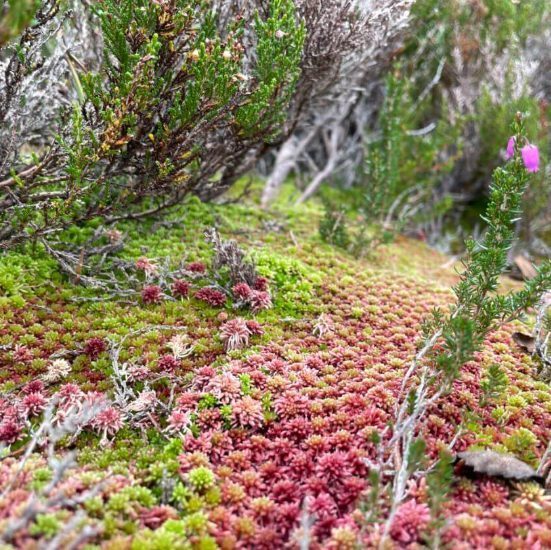
Sphagnum isn't a single plant — it's an entire genus of moss (Sphagnum) that includes hundreds of species. It grows in cold, waterlogged bogs, mostly across the Northern Hemisphere and in rainy southern regions like New Zealand and southern Chile, forming what's called a "sphagnum bog" — a saturated wetland where the moss piles up layer over layer, year after year.
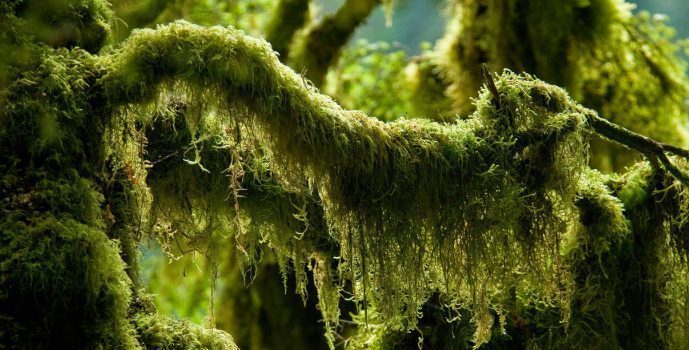
Here's the part that surprises people: the top, living layer is exactly what we call "sphagnum" in gardening. The dead, compressed layers that build up underneath it over thousands of years become peat moss — the dark, dense material familiar to anyone who's bought a bag of potting soil. Both come from the exact same plant, but they're two completely different products: living sphagnum is fibrous, light-colored, airy, and springy; peat is a decay product — dark, acidic, and dense. It's worth remembering this distinction, because people confuse the two constantly, and it's the difference between a material that roots plants brilliantly and one that's mainly used to improve soil structure.

The magic properties: why sphagnum is almost a living disinfectant
This is the genuinely impressive part. Sphagnum contains natural compounds — sphagnol and sphagnic acid, along with coumarins and triterpene compounds — that give it real antifungal and antibacterial properties, not marketing fluff. The moss's own tissue functions as a hostile environment for pathogens.
On top of that, it has a naturally low pH — living sphagnum sits around 3 to 4, a result of the plant releasing hydrogen ions into its surroundings. That acidic environment, combined with its phenolic compounds, is simply inhospitable to most bacteria and rot-causing organisms. As if that weren't enough, sphagnum can absorb and hold up to 20 times its dry weight in water, while staying airy and springy instead of collapsing into dense mush. High moisture, available oxygen, and an acidic-antiseptic environment — that's exactly the recipe every young root needs.
There's also a historical fact that makes this even more striking: during World War I, when medical dressings ran short, British and Scottish surgeons discovered that sphagnum absorbed more than twice as much blood and fluid as cotton wool — while keeping the wound environment relatively clean thanks to that same natural acidity. By the end of the war, roughly a million dressings a month were being produced from it. A material the British military relied on to save wounded soldiers is, safe to say, not "just another growing medium."
Why plant growers fall in love with it
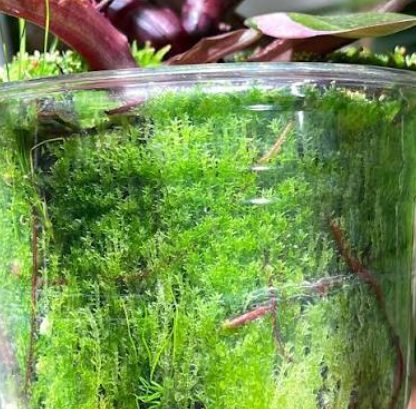
In the plant-growing community, sphagnum has earned an almost cult status — for good reason. It delivers consistent moisture, root aeration, and an environment that meaningfully reduces the risk of rot, all at once — a combination that's genuinely hard to achieve with regular soil. It's lightweight, clean to work with, you can see straight through it (very useful when tracking root development), and best of all: it works on almost everything, from notoriously hard-to-root aroids to bonsai trees.
Why it's so good for rooting
Rooting is exactly where all of sphagnum's properties come together. Any plant trying to grow roots faces two main enemies: drying out or breaking down soft tissue, and fungal or bacterial infection before the root has had a chance to establish itself. Sphagnum answers both needs at once — steady moisture that doesn't dry out fast, and an environment that holds pathogens back right when it matters most.
That's also why sphagnum is the material of choice for air layering — a technique where you make a small cut into a mature plant's stem, wrap a damp ball of sphagnum around the wounded area, and cover it in plastic. Roots develop directly on the stem while it's still attached to the mother plant, and only then do you cut it away and pot it up.
The humidity box: what it looks like in practice
The most effective way to harness sphagnum's power is a propagation box — a clear, lidded container that creates a sealed mini-greenhouse. You spread a thick layer of moist sphagnum at the bottom, position cuttings or offsets so the node sits in direct contact with the damp moss, then close the lid.
Add a heat mat underneath the box and a grow light above it, and something almost magical happens: warmth from below speeds up metabolic and cellular activity right at the root zone, the light gives the plant the energy to keep growing, and the high humidity stops the cutting from drying out before it's had a chance to build its own root system. That combination — damp sphagnum, gentle heat, and light — can root almost anything: monsteras, philodendrons, houseplants, even varieties considered "difficult to root" by other methods. It's important to crack the lid open for a few minutes every day or two to vent and prevent mold — yes, even the best natural antifungal material has its limits.
The real danger: sphagnum that's too wet
And here's the warning anyone working with sphagnum needs to know: wetter is not always better. Sphagnum that's fully saturated — the kind that drips when you squeeze it — closes off the air pockets inside its own tissue. A root sitting in that environment without oxygen simply suffocates, and once it's weakened, even sphagnum's antifungal properties won't stop rot that's already taken hold.
The simple rule: after soaking, squeeze the sphagnum by hand until it feels exactly like a damp kitchen sponge — not dripping, but definitely not dry either. If even a single drop comes out under a firm squeeze, it's still too wet.
How to soak it properly
Loose, dry sphagnum usually needs about 10–15 minutes of soaking to fully expand and absorb water; compressed bricks can take 30–45 minutes. Rainwater or distilled water is best — avoid chlorinated tap water, since chlorine harms some of the beneficial microflora living in the moss. After soaking, squeeze thoroughly, then gently pull the fibers apart by hand to restore the air pockets that got compressed — exactly what roots need in order to breathe.
New Zealand vs. Chilean: what's the difference
The market has two main "stars": New Zealand sphagnum (mostly the species Sphagnum cristatum) and Chilean sphagnum. Both are considered high quality, but there are real differences:
- Phenol content — New Zealand sphagnum has the highest phenol content (and therefore antifungal potency) of any sphagnum species; Chilean sphagnum comes in second-highest.
- Fiber structure — New Zealand sphagnum is known for long, thick, "fluffier" strands, making it especially good for wrapping orchid roots and jobs that need a sturdy structure.
- Price — thanks to its quality and demand, New Zealand sphagnum generally costs more; Chilean sphagnum offers very comparable quality at a more accessible price, making it the popular choice for everyday use in larger quantities.
Either way, it's worth checking the packaging for a quality grade (like AAA for New Zealand or "5-star" for Chilean) — the longer and more uniform the fibers, the higher the quality.
How long sphagnum actually lasts
Good-quality sphagnum in regular use (say, growing orchids) typically stays effective for one to two years before it starts breaking down, losing its fibrous structure, and accumulating salts and fertilizer residue. Once it starts shrinking and looking more "mushed" than fibrous, it's time to replace it. For short-term rooting use (weeks to a few months), you can absolutely reuse the same batch more than once, as long as it hasn't turned black, started smelling off, or shown signs of rot.
Questions every grower asks eventually
Can you grow sphagnum at home? Technically yes, but it's not simple. Sphagnum needs an acidic, waterlogged environment with good but not harsh direct light, and stable conditions over time — essentially a mini-bog. You can try a shallow, wide pot with no drainage, filled with a peat-and-sand mix, kept saturated with rainwater — but growth is very slow (in nature, a bog layer regenerates over a 5–6 year cycle), so in most cases it's simply more practical to buy sphagnum ready-made.
What's the difference between sphagnum and regular moss? "Moss" is a general term for thousands of small green plant species with no true roots. Sphagnum is one specific genus among them, with unique absorption and acidity properties most other mosses simply don't have. Ordinary decorative moss (like cushion moss used in terrariums) looks similar on the outside but doesn't offer the same antifungal or rooting properties.
Does sphagnum have another name? It's sometimes called "bog moss" — a name that accurately describes its natural habitat.
Which plants benefit from it most? Orchids are the classic users, but the list is much longer: carnivorous plants (Venus flytraps, sundews) that need the same acidic, nutrient-poor substrate as their natural bog habitat, aroids (monstera, philodendron, anthurium) for rooting and for growing as kokedama, bonsai trees, and any terrarium that needs long-term moisture retention.
Can sphagnum survive without soil at all? Absolutely — that's actually one of the reasons it's so popular. Many orchid and aroid growers use sphagnum as the sole growing medium, no soil at all, especially in clear pots that let you see the roots directly.
Can you mix sphagnum with regular potting soil? Yes, and it's very common. Combining sphagnum with perlite and standard potting mix improves aeration and moisture retention at the same time — an especially popular combination for aroids. The rule of thumb: the more a plant likes consistent moisture and dislikes "drying out between waterings," the more worth it is to increase the sphagnum ratio in the mix.
In the end, what makes sphagnum special isn't any single property — it's the rare combination of a material that soaks up huge amounts of water, stays aerated, actively resists pathogens, and is still gentle enough for the youngest root there is. It's not just another material on a store shelf. It might be one of the closest things to real "magic" that nature has to offer plant growers.